
 English
 Français
 日本語
 العربية
 繁体中文
 简体中文


Android Auto in 2026: Why Aftermarket and OEM Head Units Are Facing More Automated Test Failures
Android Auto in 2026: Why Aftermarket and OEM Head Units Are Facing More Automated Test Failures
Android Auto certification is no longer just about whether the phone can connect and the map appears on the screen.
As automotive testing becomes increasingly automated and tool-driven, intermittent problems that engineers could previously “pass” during a short manual demonstration can become repeatable test failures.
For OEM infotainment systems, aftermarket head units, wireless Android Auto solutions and automotive display products, the question is no longer simply:
“Does Android Auto work?”
The more important question is:
“Does it work consistently across connection states, supported phones, audio paths, displays and repeated test cycles?”
That is where many Android Auto projects begin to fail.
1. Automation Changes What Counts as a Failure
Manual testing is often optimistic.
An engineer connects one phone, confirms that Android Auto launches, checks navigation and music, and concludes that the system is ready.
Automated testing works differently.
The same sequence can be repeated hundreds or thousands of times while monitoring connection states, USB/Bluetooth behavior, audio routing, system responses and error logs.
This matters because an intermittent failure rate of only a few percent can easily remain invisible during manual testing but become obvious during repeated automated cycles.
Industry testing platforms are already expanding automated Android Auto and Apple CarPlay validation to reproduce real-world connection and functional issues at scale.
The result is a new engineering reality:
“Works once” is no longer a meaningful definition of system readiness.
2. Why Aftermarket Head Units Are Especially Vulnerable
Aftermarket Android Auto head units typically have greater hardware and software variation than an OEM-fixed platform.
A single product may need to work with:
multiple Android phone brands;
different Android versions;
different Bluetooth implementations;
different Wi-Fi chipsets;
different USB cables;
different screen resolutions;
different audio architectures;
different vehicle power environments.
Android Auto itself supports compatible aftermarket stereo systems as well as vehicles, which means the head unit becomes a critical bridge between the phone and the vehicle interface.
This creates several common failure points.
USB enumeration
The phone may physically connect but fail to complete the required communication sequence.
Bluetooth pairing
Bluetooth may pair successfully while the subsequent Android Auto session fails.
Wireless projection
The phone may discover the head unit but fail during Wi-Fi setup, authentication or service establishment.
Audio routing
Android Auto may display navigation correctly while call uplink, microphone, media audio or notification audio is routed incorrectly.
Display adaptation
The session may work on one screen configuration but produce incorrect scaling, touch coordinates or layout behavior on another.
These are not always obvious during basic functional demonstrations.
3. Wireless Android Auto Creates Another Layer of Risk
Wireless Android Auto introduces additional dependencies compared with a purely wired connection.
The engineering team must consider the complete chain:
Phone → Bluetooth discovery → Wi-Fi setup → authentication → projection session → audio/video transport → vehicle interaction
A failure at any stage can prevent the user from reaching a stable Android Auto session.
This is why RF performance and software integration cannot be treated as completely separate disciplines.
For example, a wireless connection may technically establish but still suffer from:
intermittent disconnections;
long connection times;
repeated reconnect cycles;
audio dropouts;
navigation interruption;
unstable phone handover;
poor coexistence with other 2.4/5 GHz functions.
A certification-ready product therefore needs more than a successful “first connection.”
4. OEM Systems Have a Different Failure Pattern
OEM head units usually benefit from a much more controlled hardware platform.
The problem is that OEM systems often have more complex vehicle integration.
The Android Auto system may interact with:
steering-wheel controls;
vehicle microphone;
amplifier;
Bluetooth hands-free profile;
USB ports;
multiple displays;
vehicle network signals;
camera systems;
vehicle audio sources;
ignition and power states.
This creates integration failures that may not exist on a standalone aftermarket head unit.
For example:
Android Auto projection works → but phone-call audio does not reach the vehicle microphone path.
Or:
Navigation works → but switching from media to an incoming call causes incorrect audio focus.
Or:
The connection works when parked → but repeated ignition cycles produce inconsistent reconnection behavior.
These are system-integration problems rather than simple Android Auto UI problems.
5. Automated Testing Makes “Intermittent” Problems Visible
This is one of the biggest changes for engineering teams.
Consider a simplified example:
A head unit has a 99% successful Android Auto connection rate.
During manual validation, 20 connection attempts may all pass.
But an automated test executes 1,000 cycles.
A 1% failure rate can now produce approximately 10 failed cycles.
The engineer can then correlate each failure with:
phone model;
Android version;
connection method;
USB/Bluetooth state;
Wi-Fi channel;
audio state;
ignition cycle;
firmware version;
reconnection sequence.
The test result becomes much more useful for root-cause analysis.
This is why automation should not be viewed only as a certification obstacle.
It is also an engineering diagnostic tool.
6. Experience Quality Is Becoming Part of the Real Risk
A technically successful connection does not necessarily mean a commercially successful product.
Google's Android for Cars ecosystem increasingly emphasizes driver-optimized experiences and vehicle-specific restrictions. Android Auto and Android Automotive OS also have different technical architectures and requirements, so engineering teams must first define exactly which platform they are developing for.
For a head unit manufacturer, the practical experience checklist should include:
Connection
First-time pairing
Reconnection
Ignition-cycle recovery
Phone switching
Connection latency
Audio
Music playback
Navigation prompts
Incoming/outgoing calls
Microphone uplink
Audio focus switching
Echo and dropout behavior
Display & interaction
Resolution
Touch accuracy
Scaling
Screen transitions
Steering-wheel controls
Stability
Long-duration sessions
Repeated connect/disconnect cycles
Sleep/wake
Reboot recovery
Phone replacement
A product can pass a basic demonstration and still perform poorly against this broader matrix.
7. Why “Certification First, Engineering Later” Is Expensive
One of the most common project mistakes is waiting until formal certification testing to discover architectural problems.
By that stage, the following may already be frozen:
SoC;
USB controller;
Bluetooth/Wi-Fi chipset;
antenna;
audio codec;
microphone architecture;
display interface;
Android firmware;
power-management strategy.
A failure at this stage may require a firmware change—or, in the worst case, a hardware redesign.
A better approach is to divide testing into three stages:
Stage 1 — Architecture Review
Before hardware freeze:
USB + Bluetooth + Wi-Fi + audio + display + power + phone compatibility
Stage 2 — Pre-Certification Validation
Before formal submission:
Repeated connection + phone matrix + audio routing + stability + failure reproduction
Stage 3 — Formal Certification
Only after the product configuration is sufficiently mature should the formal certification process begin.
This approach reduces the risk of discovering an architectural problem during the most expensive stage of the project.
8. What Should OEM and Aftermarket Manufacturers Prepare?
Before starting an Android Auto certification project, prepare a product configuration matrix covering:
| Area | Key Configuration |
|---|---|
| Head Unit | HW / SW version |
| Android Platform | Android version / build |
| Connectivity | Wired / Wireless |
| Bluetooth | Chipset + firmware |
| Wi-Fi | Chipset + RF configuration |
| USB | Controller + port design |
| Audio | Codec / amplifier / microphone |
| Display | Resolution / touch mapping |
| Phone Matrix | Major Android models + OS versions |
| Vehicle | OEM / aftermarket integration |
| Antenna | Location + RF architecture |
Then add a failure-log matrix:
Failure → reproduction condition → phone model → HU version → connection state → log → root cause → corrective action → regression result
This is much more valuable than simply recording “PASS” or “FAIL.”
BlueAsia Labs: From Certification Testing to System Readiness
At BlueAsia Labs, our Android Auto support focuses not only on whether a head unit can complete the connection, but also on identifying why a system fails and whether the failure can be reproduced before formal certification.
Our automotive testing capabilities cover Android Auto-related protocol, wired/wireless projection, audio, phone compatibility, RF/EMC and vehicle integration scenarios, allowing teams to investigate the interaction between connectivity hardware and the final infotainment experience.
For OEM and aftermarket manufacturers, the goal should not be:
“Make the test pass once.”
It should be:
“Build a head unit that remains stable when the same test is repeated under different phones, connection states and vehicle conditions.”
That is the difference between a product that merely demonstrates Android Auto compatibility and one that is genuinely ready for market.
Planning an Android Auto OEM or aftermarket project in 2026?
Contact BlueAsia Labs for an Android Auto pre-certification assessment, phone compatibility matrix, wireless connection validation and system-level failure analysis before formal certification.
 Blog
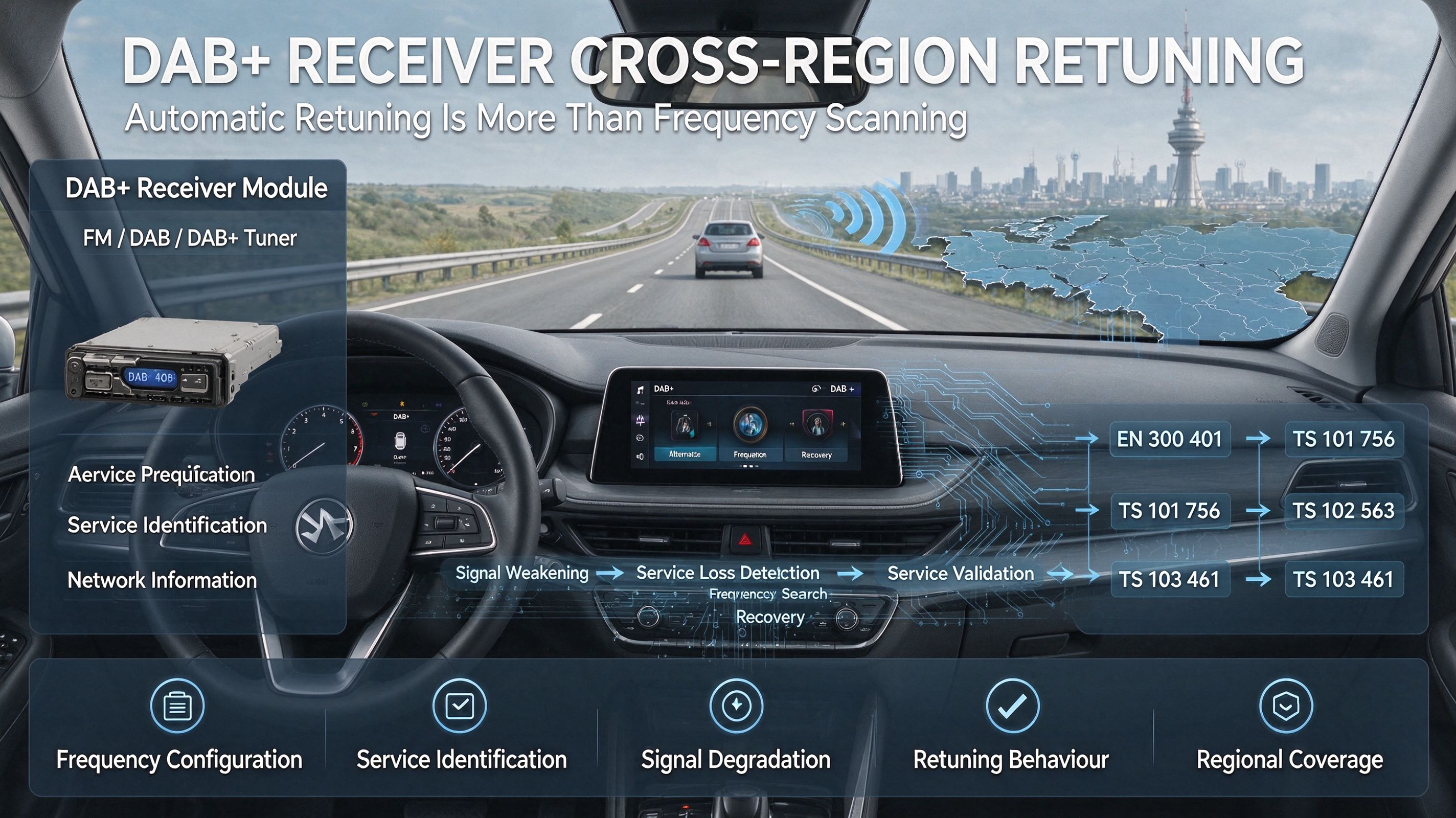
Does Your DAB+ Receiver Know When to Retune? Cross-Region Driving Can Expose Hidden Design I
Leer artículo
 Blog
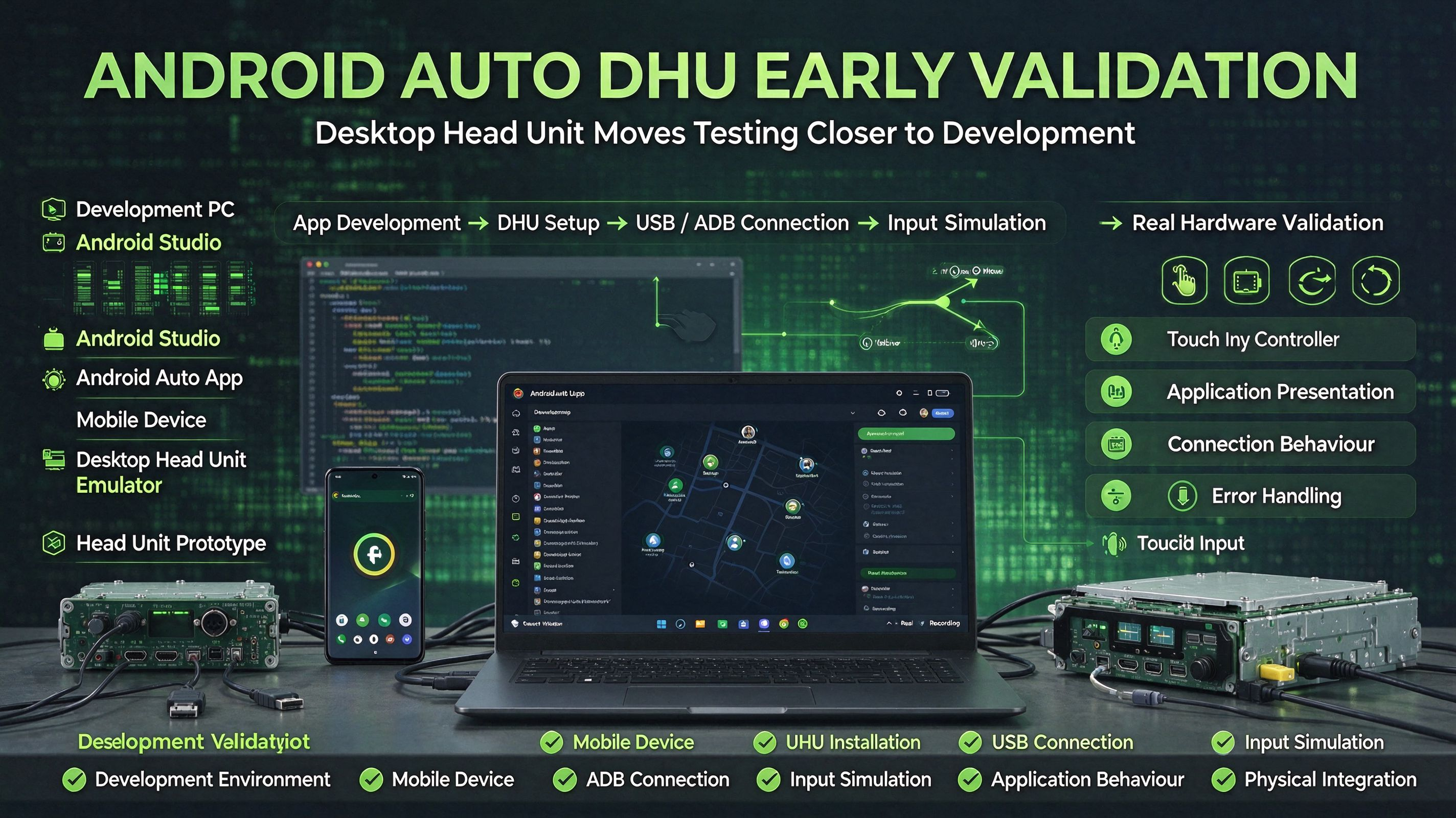
Are You Testing Android Auto Too Late? The Desktop Head Unit Can Help Move Validation Earlie
Leer artículo
 Blog
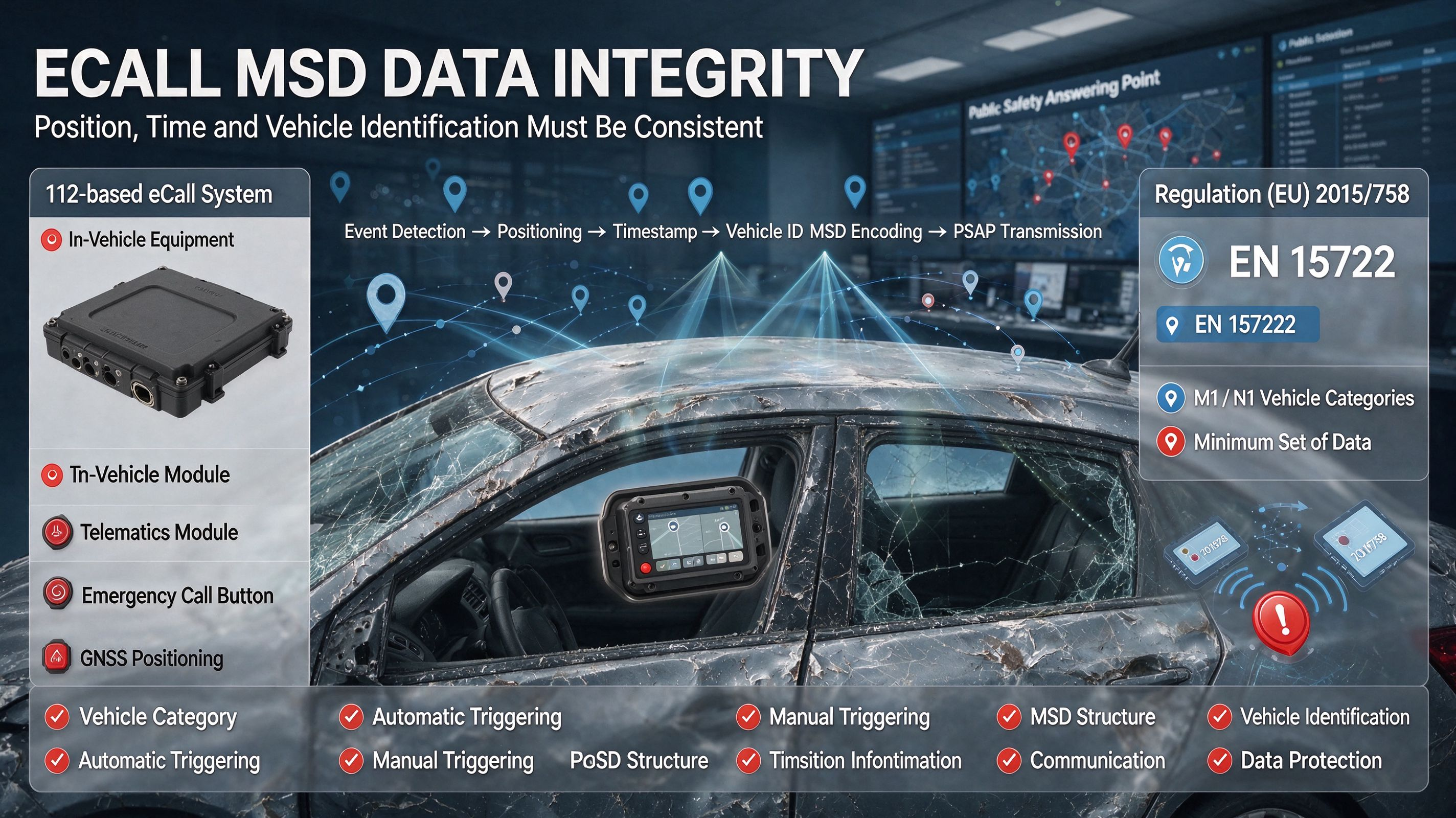
Can Your eCall System Transmit the Right Data? Position, Time and Vehicle Identification Mat
Leer artículo
 Blog
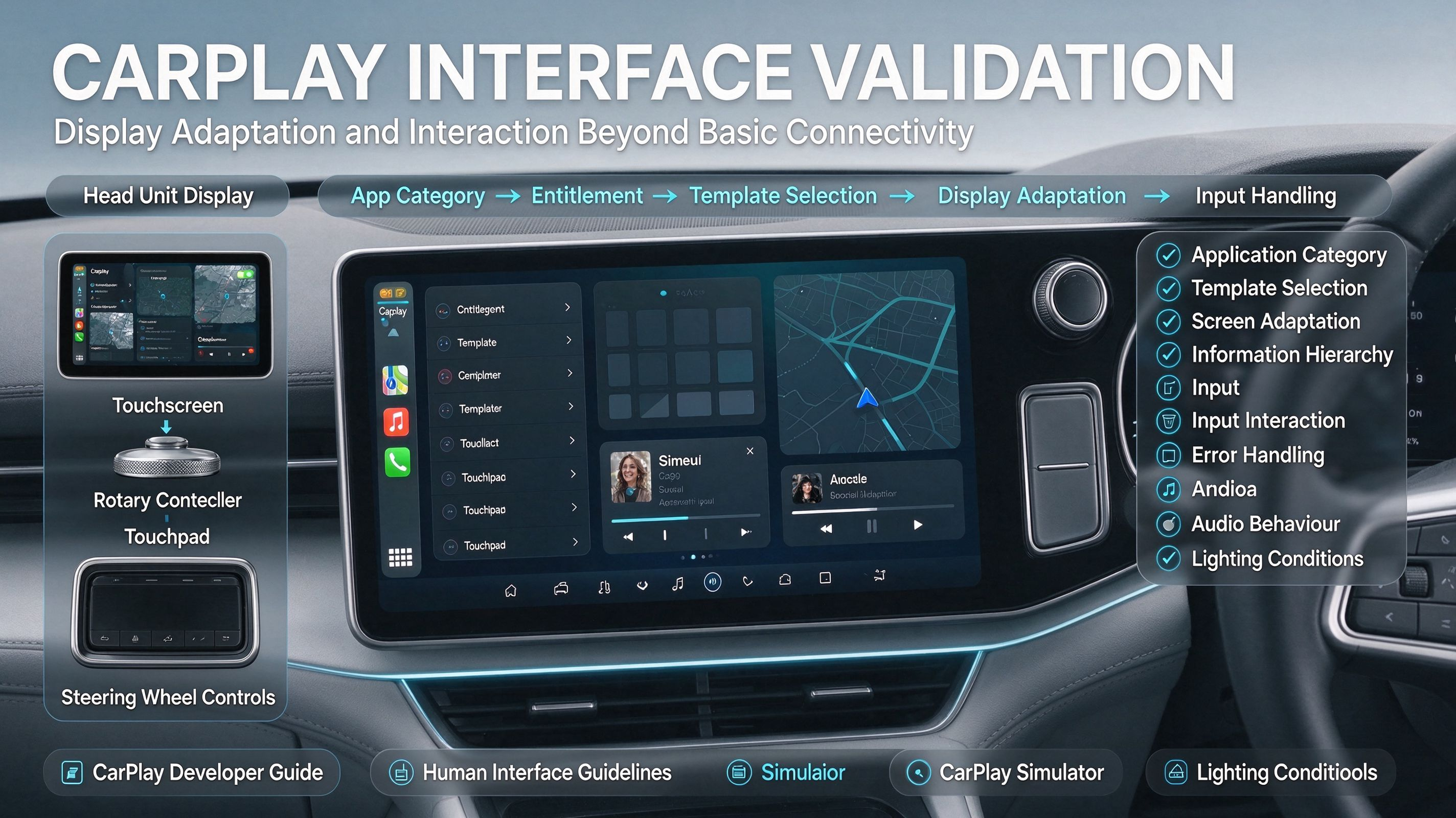
Does Your CarPlay Interface Really Fit the Vehicle? Display and Interaction Need More Than B
Leer artículo
 Blog
Why The Best Compliance Strategy Is To Design Products That Never Need Retesting
Leer artículo
 Blog
Why Automotive Connectivity Certification Is No Longer About One Test—It's About Buildi
Leer artículo

 4000259520